
Monroe County VINE Coverage
Florida VINE is the state's free custody-notification service. Florida Department of Corrections material says the program covers all 67 county jails and FDC. For Monroe County, that means a person may have an MCSO jail record, an FDC record, or both at different stages. The direct service is available through Florida VINE and by phone at 1-877-846-3435.
VINE is strongest for a time-sensitive change. Published Florida material distinguishes release, transfer, escape, work-release placement, transfer to another jurisdiction, return to custody, and death. Those terms are not interchangeable. A release event means the named reporting agency ended that custody status, while a transfer can mean confinement continued under another agency.
Search Monroe County VINE Inmates
Start with the exact name or offender number and then narrow the match. Do not select a result just because the name looks right. Middle initials and dates of birth are especially useful when several people share similar names.
- Open Florida VINE and choose the person or offender search.
- Enter the exact first and last name or an offender ID. Add a middle initial or date of birth when needed.
- Review the matching agency and record. Select MCSO for the county-jail episode or FDC for state prison and corrections supervision.
- Open the record and read its custody status, location, offender number, and any scheduled or release-related field actually displayed.
- When the destination matters, cross-check the next possible custodian and the court record.
The search is about one person, not a list of everyone released recently. Broader name, court, state, and federal routes are organized in the Monroe County released inmate lookup when VINE alone cannot resolve the custody path.
Note: Preserve the agency name and offender number with the status so the event remains tied to the correct record.
Monroe County VINE Release Fields
The exact fields can vary by agency and custody episode. Read only what appears on the matched record. A county-jail entry should not be expanded with state-prison facts from a separate FDC result.
| Field or event | How to read it |
|---|---|
| Name and identifiers | Details used to distinguish the person from similar matches. |
| Reporting agency | The jail or corrections system responsible for that VINE record. |
| Custody status | The status last reported by that agency, such as in custody or released. |
| Location | The facility or agency location shown for the record. |
| Offender number | The identifying number attached to the selected custody episode. |
| Scheduled or release-related field | A date or event that must be read in its exact displayed context. |
A released or out-of-custody result confirms that the reporting agency changed its record. It does not prove that no other county, state, federal, or immigration authority accepted custody. A future scheduled date is also not a completed release. For a state prisoner, FDC's released status and past movement or release event offer a stronger completed-release check.
Open Florida VINE for Monroe
The official Florida VINE interface is the correct entry point for a Monroe County person search and notification registration. Search fields and controls can change, so follow the labels shown on the live screen.

The captured landing view establishes the state service and search entry point without manufacturing a released-person result.
Register Monroe County VINE Alerts
Register only after selecting the correct person and agency. The current control may read “Get Notified,” “Notify Me of Status Changes,” or similar text. The available methods can include phone, text, email, or app notification.
- Choose the notification control on the matched MCSO or FDC record.
- Select the offered phone, text, email, or app method and enter the requested contact information.
- For automated phone calls, create the requested four-digit PIN. It acknowledges the call and stops repeats.
- Verify the displayed offender, reporting agency, event choices, and contact method before submitting.
- Confirm the registration and preserve the confirmation details for later management.
The four-digit call PIN is not an offender ID. A registration-management system may separately send a six-digit verification code to a phone or email. That code confirms or manages contact information and should not be confused with the PIN used to acknowledge automated calls.
Note: Keep the registration confirmation private and update the chosen contact method when it changes.
Read Monroe County VINE Events
Report the event in the exact terms used by VINE. “Release,” “transfer,” and “transfer to another jurisdiction” describe different changes. Work-release placement, escape, return to custody, and death are also distinct events in Florida program material. Replacing all of them with “got out” can create a false account of the person's status.
- Custody episode
- The period tracked by one jail or corrections agency.
- Transfer
- A move to another facility, agency, or jurisdiction where custody may continue.
- Scheduled date
- A future date that may change and does not prove a completed release.
- Discharge
- The end of the specific custody or supervision status identified by the agency.
There is no authoritative Florida source in the Monroe research that promises how long a released county record remains searchable in VINELink. Save an alert's event terms and confirmation, then obtain an agency record when a durable or certified account is needed.
Florida VINE and FDC Notices
Florida has two notification layers that should not be merged. Direct VINE registration is available through the VINE channel within its terms. FDC also maintains a separate victim-notification database with its own eligibility rules and duties to keep contact details current. Updating one registration does not necessarily update the other.
Published FDC material describes county data transfers about every 15 minutes and FDC data about every 30 minutes during stated daily hours. Those are system transfer schedules, not a promise that every source record will appear without delay. MCSO must first record and transmit its event, and VINE must then process it.
This distinction matters when a Monroe County person moves from an MCSO jail into FDC. An alert tied to the county record can describe the end of the MCSO episode, while a separate FDC record begins the state episode. Register on the record whose change matters, and preserve both agency names if following the handoff. A later update to the FDC notification contact does not prove that the direct VINE registration attached to MCSO changed with it.
The FDC program material documenting Florida VINE coverage is represented by a successful manifest capture. It supports statewide county-jail and FDC coverage, not a guaranteed response time for one Monroe County record.
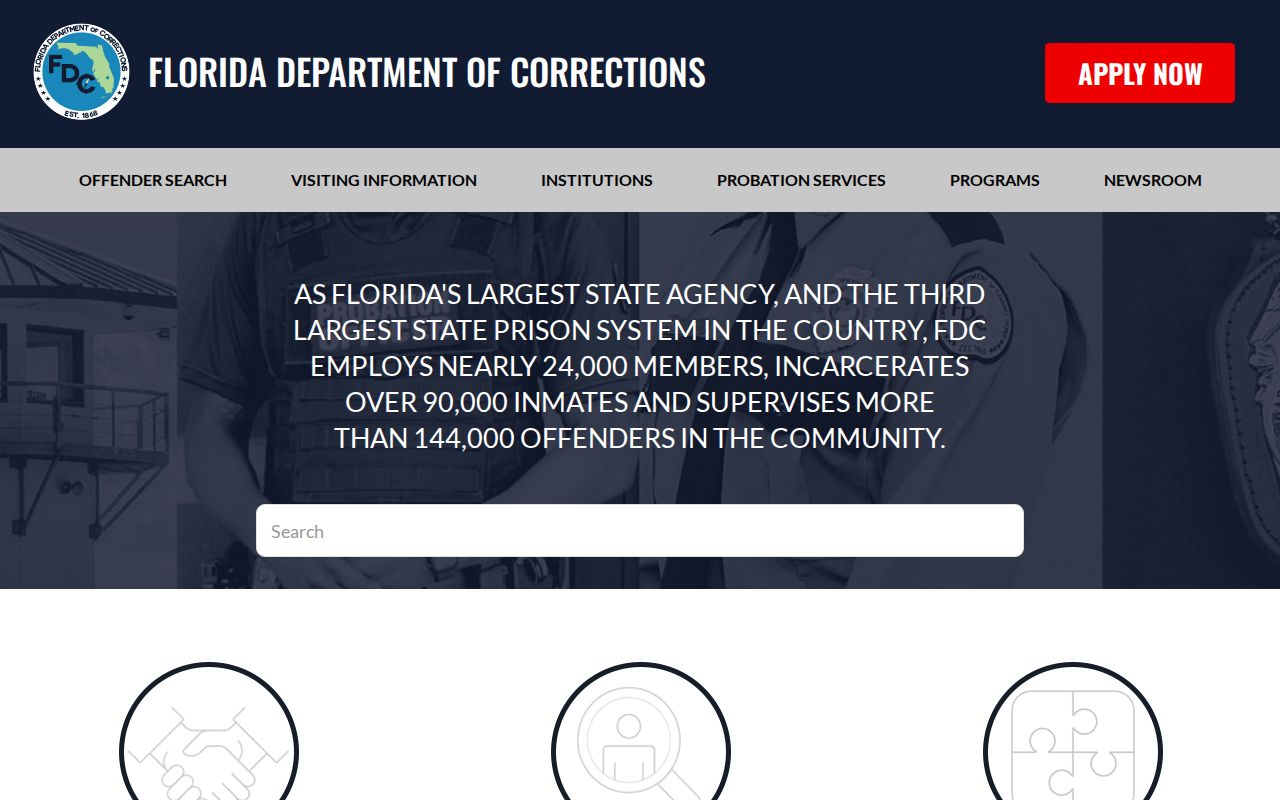
The program evidence helps define the two participating custody systems while preserving their separate records.
Confirm Monroe County VINE Releases
For an MCSO record, compare the VINE event with the Sheriff's seven-day release table. The table supplies identity, facility, booking time, release time, and bond amount, but no release reason or destination. If the person still appears on the current MCSO jail log, note the roster's “as of” time and verify whether the sources refer to the same booking episode.
The Monroe Clerk criminal docket can show bond or release authority, sentence, probation, dismissal, or a transfer-producing sentence. It should not be used as the physical release clock. If the short public source is stale or has expired, request the MCSO movement or release record through the agency's records portal.
Monroe County's three jail locations add another matching point. The MCSO release table has a facility field, so retain Stock Island, Marathon, or Plantation Key when shown. A move from a satellite facility to Main may end one location entry without returning the person to the community. The agency record and docket are needed when the visible event does not identify the destination.
Confirm Monroe County FDC Releases
Use FDC Offender Search when the person entered Florida prison or state community supervision. Search the broad, released, or supervised population rather than incarcerated-only. Match the DC number, name, date of birth, photograph, and case details. The current FDC web label is “Current Release Date,” while Florida law calls the computed concept a tentative release date.
A future date can change because of gain-time awards, forfeitures, review, sentence structure, or other legal factors. Completed state release is better supported by a released status and a past release event. If Community Corrections follows, the person left prison but remains under legal supervision. VINE's FDC event and the FDC record should refer to the same DC number and custody episode.
Note: A county-jail-only stay does not create an FDC release record unless the person actually enters FDC custody or supervision.
Monroe County VINE Search Limits
VINE does not track federal Bureau of Prisons custody. A Monroe County case can lead to USMS pretrial custody, a sentenced BOP term, or an ICE transfer, each with a different verification path. Use the federal court docket for a detention or release order, BOP for sentenced federal custody and historical releases, and ICE's locator for the immigration custody period it covers.
Negative results are not proof that no custody event occurred. A spelling variant, alias, initial, date-of-birth error, confidential status, source lag, short retention period, or different custodian can hide the expected match. Use at least two identifiers, document the date and population searched, and contact the reporting agency when the event is urgent or the sources conflict.
VINE also does not replace a public-record request. Ask MCSO for the existing movement or release entry when the precise county time and destination are needed. Ask FDC for a fuller movement record when the state history is incomplete. Each request should identify the person, agency, custody episode, and date range without treating a VINE screen as a certified record.